Skip to content
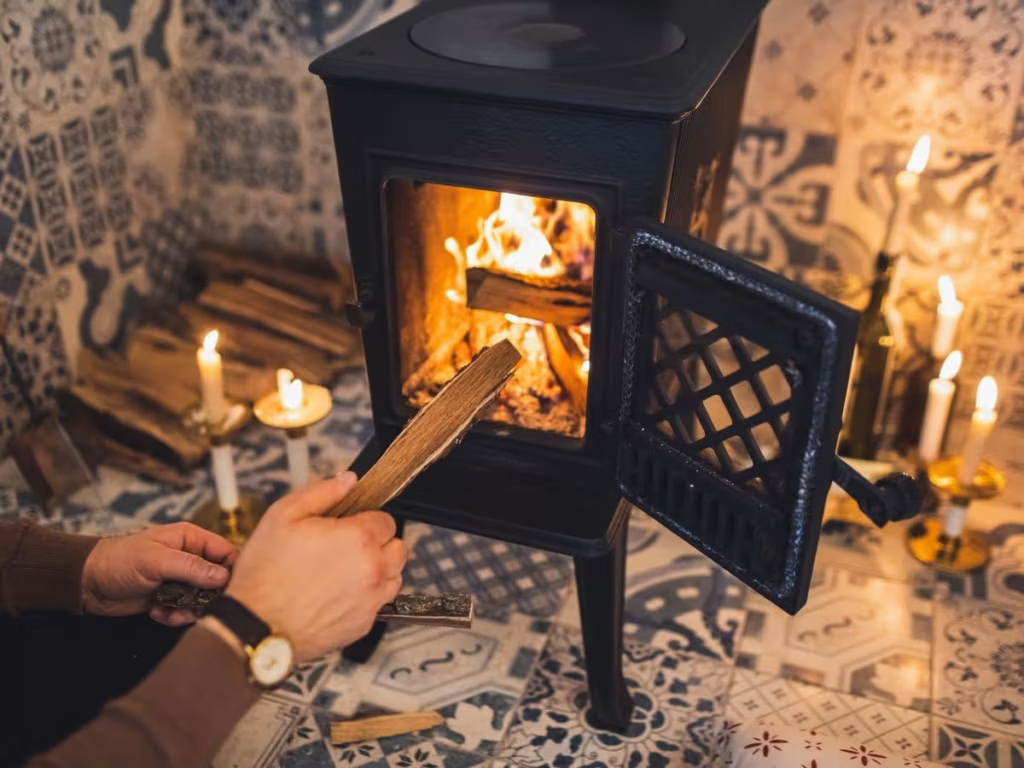
Wood burners are a popular choice in UK homes, especially for people who want efficient heating and a traditional, cosy feel. But they also raise an important question: Are Wood Burners Bad For The Environment? how environmentally friendly are they really?
The honest answer is that it depends. Wood burners can have a relatively low environmental impact when used correctly, but they can also contribute to pollution if they’re used poorly or with the wrong fuel.
Let’s break it down in simple terms.
The simple truth
Are Wood Burners Bad For The Environment?
Wood burners aren’t automatically bad for the environment.
Modern stoves, combined with dry wood and good installation, can be a reasonably efficient and lower-carbon way to heat your home. But they still produce smoke and tiny particles, which is why they’re regulated in the UK.
So it’s less about whether you have one, and more about how you use it.
What actually affects the environment?
1. Carbon emissions
Burning wood releases carbon dioxide (CO₂). On paper, wood is often called “carbon neutral” because trees absorb CO₂ as they grow.
In reality, it’s not quite that simple:
- The carbon is released immediately when burned
- Trees take years to reabsorb it
- Unsustainable harvesting can increase the overall impact
So wood burning is only close to carbon neutral when the wood is sourced responsibly and replaced through new tree growth.
2. Air quality and smoke
The biggest concern with wood burners is air pollution, especially very fine particles (known as PM2.5).
These come mainly from:
- Burning wet or unseasoned wood
- Running the stove too slowly
- Using older, inefficient appliances
Modern stoves produce far less smoke than open fires or older models, but they don’t eliminate emissions completely.
3. Efficiency matters a lot
A big factor is how much heat you get from the wood you burn.
- Old open fires: lots of heat lost up the chimney
- Modern wood burners: much more heat from the same amount of wood
That means efficient stoves can actually reduce environmental impact because you burn less fuel overall.
How to make a wood burner more environmentally friendly
Use dry, seasoned wood
This is the single most important factor.
Wet wood:
- Smokes more
- Produces more pollution
- Burns inefficiently
Good wood:
- Burns hotter and cleaner
- Produces more heat
- Uses less fuel overall
Kiln-dried logs are usually the best option.
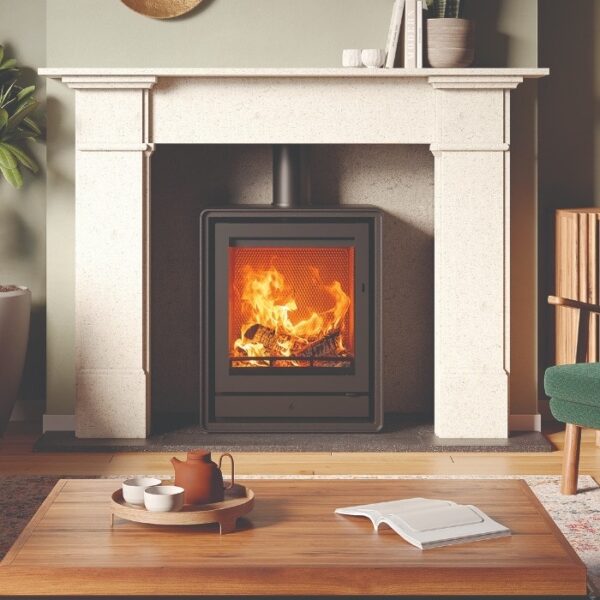
Choose a modern stove
Newer stoves are designed to meet strict UK emissions standards set by Department for Environment, Food & Rural Affairs.
They are:
- More efficient
- Cleaner burning
- Better controlled
If your stove is very old, upgrading can make a noticeable difference to both performance and emissions.
Get it installed and maintained properly
Installation and maintenance matter more than most people realise.
A professionally fitted stove by a certified installer (such as those registered with HETAS) helps ensure:
- Safe operation
- Better efficiency
- Lower emissions
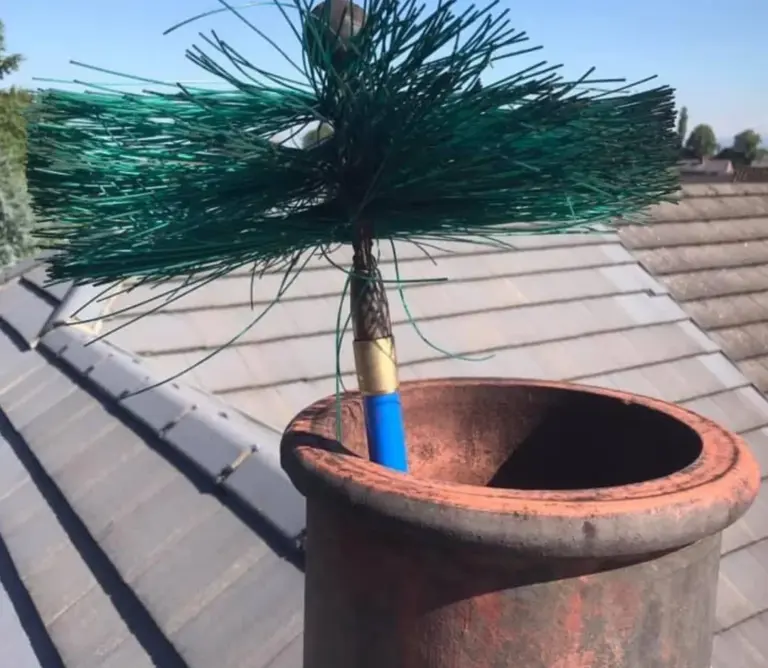
Regular chimney sweeping also keeps things running cleanly.
Avoid the wrong fuel
Never burn:
- Painted or treated wood
- Waste materials
- Damp logs
These can increase pollution and damage your stove.
How do wood burners compare to other heating?
It depends on what you’re comparing them to.
- Gas heating: lower local air pollution, but still fossil-fuel based
- Electric heating: depends on how electricity is generated
- Wood burners: potentially lower carbon if used well, but higher local particulate emissions
There’s no perfect option, just different trade-offs.
Are wood burners being banned?
No, wood burners are not being banned in the UK.
However, rules are getting stricter, especially in cities and smoke control areas. The focus is on:
- Cleaner stoves
- Better fuel
- Reduced emissions
So wood burners are still allowed, but expected to meet higher standards.
Final takeaway
Wood burners aren’t simply “good” or “bad” for the environment.
Their impact depends on how they’re used.
A modern stove, burning dry wood, installed properly and maintained regularly, can be a relatively efficient heating option. But a poorly used stove or open fire can create unnecessary pollution.
If you get the basics right, good stove, good fuel, good airflow, you’ll get a much cleaner and more efficient burn.